

This article from our 2013 issue, “Fame,” offers a look at the way information—whether it’s true or not—spreads across the Internet.
On April 11, 2012, Zeddie Little appeared on Good Morning America, wearing the radiant, slightly perplexed smile of one enjoying instant fame. About a week earlier, Little had been a normal, if handsome, 25-year-old trying to make it in public relations. Then on March 31, he was photographed amid a crowd of runners in a South Carolina race by a stranger, Will King, who posted the image to a social networking website, Reddit. Dubbed “Ridiculously Photogenic Guy,” Little’s picture circulated on Facebook, Twitter, and Tumblr, accruing likes, comments, and captions (“Picture gets put up as employee of the month/for a company he doesn’t work for”). It spawned spinoffs (Ridiculously Photogenic Dog, Prisoner, and Syrian Rebel) and leapt to the mainstream media. At a high point, ABC Morning News reported that a Google search for “Zeddie Little” yielded 59 million hits.
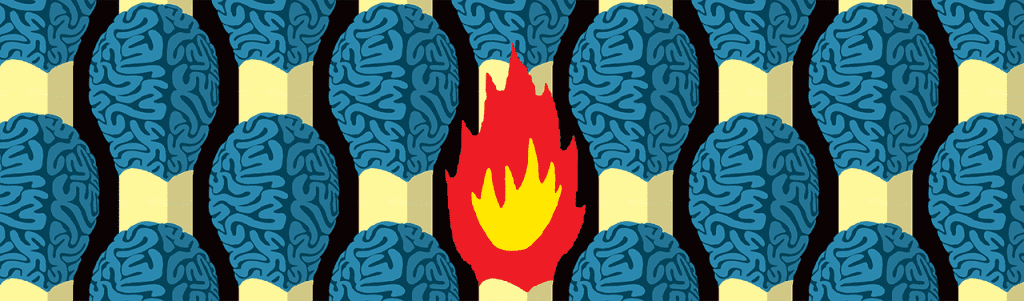
Why the sudden fame? The truth is that Little hadn’t become famous: His meme had. According to website Know Your Meme, which documents viral Internet phenomena, a meme is “a piece of content or an idea that’s passed from person to person, changing and evolving along the way.” Ridiculously Photogenic Guy is a kind of Internet meme represented by LOL cats: that is, a photograph, video, or cartoon, often overlaid with a snarky message, perfect for incubating in the bored, fertile minds of cubicle workers and college students. In an age where politicians campaign through social media and viral marketers ponder the appeal of sneezing baby pandas, memes are more important than ever—however trivial they may seem.
But trawling the Internet, I found a strange paradox: While memes were everywhere, serious meme theory was almost nowhere. Richard Dawkins, the famous evolutionary biologist who coined the word “meme” in his classic 1976 book, The Selfish Gene, seemed bent on disowning the Internet variety, calling it a “hijacking” of the original term. The peer-reviewed Journal of Memetics folded in 2005. “The term has moved away from its theoretical beginnings, and a lot of people don’t know or care about its theoretical use,” philosopher and meme theorist Daniel Dennett told me. What has happened to the idea of the meme, and what does that evolution reveal about its usefulness as a concept?
In an age where politicians campaign through social media and viral marketers ponder the appeal of sneezing baby pandas, memes are more important than ever—however trivial they may seem.
Memes were originally framed in relationship to genes. In The Selfish Gene, Dawkins claimed that humans are “survival machines” for our genes, the replicating molecules that emerged from the primordial soup and that, through mutation and natural selection, evolved to generate beings that were more effective as carriers and propagators of genes. Still, Dawkins explained, genes could not account for all of human behavior, particularly the evolution of cultures. So he identified a second replicator, a “unit of cultural transmission” that he believed was “leaping from brain to brain” through imitation. He named these units “memes,” an adaption of the Greek word mimene, “to imitate.”
Dawkins’ memes include everything from ideas, songs, and religious ideals to pottery fads. Like genes, memes mutate and evolve, competing for a limited resource—namely, our attention. Memes are, in Dawkins’ view, viruses of the mind—infectious. The successful ones grow exponentially, like a super flu. While memes are sometimes malignant (hellfire and faith, for atheist Dawkins), sometimes benign (catchy songs), and sometimes terrible for our genes (abstinence), memes do not have conscious motives. But still, he claims, memes parasitize us and drive us.
Pinpointing when memes first made the leap to the Internet is tricky. Nowadays, we might think of the dancing baby, also known as Baby Cha-Cha, that grooved into our inboxes in the 1990s. It was a kind of proto-meme, but no one called it that at the time. The first reference I could find to an “Internet meme” appeared in a footnote in a 2003 academic article, describing an important event in the life of Jonah Peretti, co-founder of the hugely successful websites The Huffington Post and BuzzFeed. In 2001, as a procrastinating graduate student at MIT, Peretti decided to order a pair of Nike sneakers customized to read “sweatshop.” Nike refused. Peretti forwarded the email exchange to friends, who sent it on and on, until the story leapt to the mainstream media, where Peretti debated a Nike representative on NBC’s Today Show. Peretti later wrote, “Without really trying, I had released what biologist Richard Dawkins calls a meme.”
Peretti concluded that the email chain had spread exponentially “because it had access to such a wide range of different social networks.” Like Dawkins, he saw that a meme’s success depends on other memes, its ecosystem—and further saw that Internet memes’ ecosystems were online social networks, years before Facebook existed. According to a recent profile in New York Magazine, the Nike experience was formative for Peretti, who created BuzzFeed with the explicit goal of creating viral Internet memes. The company uses a formula called “Big Seed Marketing,” that begins with an equation describing the growth of a virus, the spread of a disease.
From the perspective of serious meme theorists, Internet memes have trivialized and distorted the spirit of the idea. Dennett told me that, in a planned workshop to be held in May 2014, he hopes to “rehabilitate the term in a very precise kind of way” for studying cultural evolution.
According to Dawkins, what sets Internet memes apart is how they are created. “Instead of mutating by random chance before spreading by a form of Darwinian selection, Internet memes are altered deliberately by human creativity,” he explained in a recent video released by the advertising agency Saatchi & Saatchi. He seems to think that the fact that Internet memes are engineered to go viral, rather than evolving by way of natural selection, is a salient difference that distinguishes from other memes—which is arguable, since what catches fire on the Internet can be as much a product of luck as any unexpected mutation.
“I don’t know about you, but I’m not initially attracted by the idea of my brain as a sort of dung heap in which the larvae of other peoples’ ideas renew themselves.”
But if the concept of memes can really offer new insight into the intricate web of digital culture and cultural evolution more broadly, why have academics neglected it? Looking for answers, I called Susan Blackmore, a British professor who may be one of the last defenders of memetics as a scientific field. In a 2008 TED talk, Blackmore is an animated speaker, bright-eyed and wiry, her short grey hair dyed with streaks of blue. I reached her at her home in Devon, England, where she is occasionally joined in the garden by Dawkins and Dennett for meetings of the “meme lab.” “It’s only a bit of fun, nothing serious,” Blackmore said. Sometimes, members try experiments, like folding Chinese sailing ships from origami, itself a kind of meme. She remembered a March meeting in which the issue of Internet memes arose, saying, “Richard was upset because he invented the term, which shouldn’t just be about viral Internet memes. It’s a very powerful concept for understanding why humans are the way we are.”
For Blackmore, memetics is a science. An Oxford-educated psychologist, her early work was on telepathy, which she spent years investigating after an out-of-body experience at the age of 19. She subsequently found no evidence for the existence of paranormal phenomena, but she was no stranger to pushing scientific frontiers. It is perhaps unsurprising that she decided to flesh out memetics. Dawkins wrote that, with memes, he did not intend to “sculpt a grand theory of human culture.” In her 1999 book, The Meme Machine, Blackmore does just that. She argues that everything from the development of language to our big brains were products of “memetic drive.” This is perhaps her most radical claim: that memes make us do things.
Considering this idea in his book Consciousness Explained, Dennett writes, “I don’t know about you, but I’m not initially attracted by the idea of my brain as a sort of dung heap in which the larvae of other peoples’ ideas renew themselves… who’s in charge, in according to this vision—we or our memes?” Still, Dennett, too, became a major proponent of meme theory. Speaking on the phone, he used memes to explain the joy we take in our culture and related decisions not to procreate wildly. College, he pointed out, is a great underminer of genetic fitness. Reading Blackmore and Dennett, the idea of meme as mental parasite becomes both more and less convincing: If we are created and driven by our memes, then we are our memes, a duality that Dennett himself seems to recognize.
Perhaps the notion of the meme is evolving in the direction of its own survival.
Yet, the very breadth of the concept makes it difficult to approach memes from the perspective of serious, observation-based science. In the analogy to genes, memes have inevitably disappointed. As Dawkins himself wrote, memes, as entities, are more vague than genes, where alleles compete to hold the same “chromosomal slots.” Unlike genes, memes are not directly observable and have high rates of mutation. Also, no one seems to be sure if memes exist. On the phone, Blackmore told me “the one good reason” memetics might not be a science: “There has been no example of where some scientific discovery has been made using meme theory, that couldn’t have been made any other way.” Still, Blackmore told me that people are doing research on memes—they just don’t call them by that name.
Looking for meme theory at work, I found network theory, an interdisciplinary field that unites computer science, statistics, physics, ecology, and even marketing. “If you want to use memetics to explain ‘everything,’ like how religion spreads, the problem is the data,” said Michele Coscia, a researcher at the Harvard Kennedy School, who recently wrote a paper displaying a statistical “decision tree” that described the success of memes like Ridiculously Photogenic Guy. For Coscia, Internet memes, with their visible mutations and view counts, solved the problem of empirical evidence, allowing him to do work he sees as analogous to genetics experiments.
Perhaps the notion of the meme is evolving in the direction of its own survival. The term “Internet meme” appears to be growing exponentially from year to year, in classical memetic fashion. This is what Bob Scott, a digital humanities librarian at Columbia University, found when he ran various searches on the comprehensive news and wire-service aggregator LexisNexis. He saw that the term “Internet meme” showed up with the new millennium and really took off in 2004, with references roughly doubling each year thereafter.
Infectious Internet memes are now big business. BuzzFeed now draws 85 million unique visitors a month, compared to The New York Times’ website at 29 million, and was recently valued at $200 million. Its staff trawl the Internet for viral content and curate it, adding news stories, humor pieces, and advertisements, or “sponsored posts.” These categories can be hard to disentangle, even though ads are printed on a taupe background. Scrolling through BuzzFeed, I read: “20 People We Hope to Never See Promoted on OK Cupid,” (which was an ad by Virgin Mobile), a new story on poisoned Indian children, and a post about a Republican Congressman who had “live tweeted” Jay-Z’s new album. It turned out that “23 Times When Wal-Mart Didn’t Disappoint” was not an ad, but still, the post made me think about how subversive humor—the kind that made Peretti’s email exchange with Nike so popular—could be used to advertise one of America’s least-subversive mega-chains.
While entertaining bored office workers seems harmless enough, there is something troubling about a multi-million dollar company using our minds as petri dishes in which to grow its ideas. I began to wonder if Dawkins was right—if the term meme is really being hijacked, rather than mindlessly evolving like bacteria. The idea of memes “forces you to recognize that we humans are not entirely the center of the universe where information is concerned—we’re vehicles and not necessarily in charge,” said James Gleick, author of The Information: A History, A Theory, A Flood, when I spoke to him on the phone. “It’s a humbling thing.”
It is more humbling still to think that our minds can be seduced not through the agency of memes, as Blackmore sees it, but through human agency and clever algorithms. Not by religions or quirks of culture, but by a never-ending list of stories that make us laugh. Even if the meme meme is too broad for empirical study, it offers us a powerful metaphor for how we absorb other peoples’ ideas, and how they absorb us. So maybe this is what meme theory can ultimately give us: the insight we need to put LOL cats aside—and get down to work.
Abby Rabinowitz has written for The New York Times and teaches writing at Columbia University.

